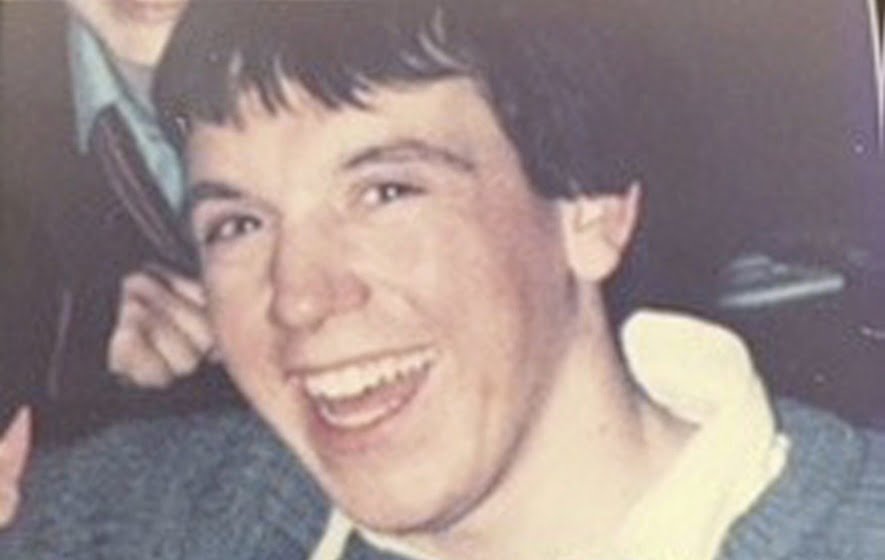
Francis Patrick Bradley, a 20-year-old beloved son, brother, partner, friend and neighbour from Co Derry, was shot and killed by the British Army on the 18th of February, 1986, in a shoot-to-kill operation carried out by the SAS. Only four months before his death, police told Francis he would not live to see his 21st birthday. The threat was carried out with tragic effect. Now, almost thirty-nine years later, his family is still denied justice.
The inquest, which opened in April 2023, was one of only a few to conclude before the British Government’s self-imposed May deadline. This despite blatant attempts by former soldiers and the Ministry of Defence (MoD) to stall the proceedings. After hearing from a variety of experts – including forensic, ballistics, military, medical and meteorological – and witnesses, evidence concluded in April 2024. Francis’s surviving family were present in the courtroom throughout the entirety, even when testimony included harrowing and disturbing details. Yesterday, the court’s gallery was packed with friends, family, and supporters, to hear the findings which seem not to comport with the totality of evidence.
The only direct witnesses to Francis Patrick Bradley’s death are the soldiers who carried out his murder. Their credibility dwindled as the inquest progressed, particularly in the final weeks of hearings as one of their expert witnesses unintentionally exposed the soldiers’ evidence as inconsistent, self-serving, and ultimately incompatible with the rest of the evidence. Throughout the proceedings, the soldiers and their lawyers suggested that the coroner take the soldiers’ accounts as gospel and disregard the forensic and expert evidence, despite the soldiers’ clear and repeated untruths. In reading the coroner’s findings, it seems that he followed this recommendation.
In the last days of hearings, it was revealed that the military had indeed recorded a video of the entire interaction between Francis Bradley and the soldiers. Coroner Irvine castigated State parties for their failure to provide the video or an adequate explanation for its absence, but he did not comment on the fact that all but one soldier – Soldier U – willfully concealed the existence of the recording.
Without the recording, then, we can only piece together the sequence of events from the witnesses and their events. It seems that the night unfolded as follows:
Against the backdrop of a sustained joint military and police covert surveillance operation in the area, a group of five SAS operatives (Soldiers A-E) were deployed to the area behind a house in Castledawson. According to the soldiers, the night’s mission was to apprehend suspected gunmen. Their actions on that night, as with all other operations, were governed by the Yellow Card, a document issued to soldiers which outlined the circumstances and manner in which soldiers could use lethal force. Coroner Irvine stated several times that the Yellow Card was simply guidance and that a failure to comply was not itself a legal infraction or evidence that a soldier’s actions were unjustified.
The soldiers were apparently deployed in response to intelligence received by surveillance operatives that night, who allege that they saw Francis Bradley removing what appeared to be weapons from the boot of a car. There is conflicting evidence whether the soldiers were deployed in response to this intelligence, or whether the surveillance operatives simply provided a convenient excuse for the SAS to carry out a pre-planned operation.
Regardless, hidden behind a hedgerow and facing a field, the soldiers lay in wait. Francis Bradley entered the field. He was unaware of the soldiers’ presence until Soldier A shouted “Halt.” This shout failed to identify the soldiers as State forces and was the first of many Yellow Card violations that night. After issuing the instruction to halt, Soldier A fired a single shot at Mr Bradley, striking him in the pelvis. Despite his previous insistence otherwise, Soldier A admitted on the stand that Francis Bradley never pointed a gun at any of the soldiers.
Pathologist and Soldier A’s evidence demonstrate that Francis was turned away from the soldiers when he was hit by this first bullet and likely bent over with his torso parallel to the ground. However, the coroner still determined that Soldier A fired this shot in a clear and true belief that his life, or the life of the other soldiers, was at risk. Medical experts agreed that Francis could have survived this first gunshot wound if he had received prompt medical attention.
Instead, Soldier C fired four separate bursts, totalling 20 bullets, at Francis as he lay injured. Seven of the rounds hit their intended target. All of Soldier C’s shots were fired when Francis was already severely wounded and either on his hands and knees or lying on his back on the ground. The three fatal bullets – fired in a burst of automatic gunfire by Soldier C – struck Francis in the stomach while he was lying on his back. Lawyers for his family told the inquest that his murder, and these final shots, were “an execution… of a man in a totally vulnerable position.” The coroner rejected this suggestion. Seeming to rely on the misguided assumption that British soldiers were always justified and proportional in their use of lethal force in the north of Ireland, the coroner pronounced that Soldier C believed, at the moment of firing the burst of automatic gunfire, that Francis Bradley – lying gravely wounded on his back with a shattered pelvis – was a clear and present danger. The shock was clear in legal representatives and observers alike when the coroner pronounced that these final three shots were therefore justified and proportional.
Though each soldier denied a culture of “trigger-happiness,” several SAS operatives involved in Francis Bradley’s death were involved in the fatal shootings of others in the north of Ireland, some of which were later found to be unlawful executions. Additionally, the soldier who oversaw the operation told the inquest that operations that he considered a mission successful even if it killed civilians. A staggering 50% of his operations resulted in at least one death, including that of young Francis Bradley.
The coroner also determined that the police investigation into Francis Bradley’s death was adequate. Even ignoring the copy-and-paste nature of the soldiers’ statements – which were taken several days after the incident – the soldiers were given time to collude and align their stories to ensure they could provide justification for what was, in reality, a shoot-to-kill operation. There were also allegations that the interviewing police officers retroactively provided justification for Soldier A’s use of lethal force by altering his statement to falsely state that Francis Bradley was advancing toward the soldiers with a weapon ready to fire. Despite Soldier A’s firm and repeated assertions in his oral evidence that Francis Bradley never pointed a weapon at the soldiers, the coroner nonetheless determined that Soldier A’s original statement was true.
The coroner’s findings, which are a blow not only to the Bradley family but to the entire pursuit of truth in justice in the north of Ireland, found that:
- The operation was planned and executed in a manner that minimised the risk of use of lethal force;
- Individually and collectively, Soldiers A and C were fully justified in their use of lethal force based on a true belief that Francis Bradley presented a risk to their lives or the lives of the other soldiers in the patrol;
- Soldier C’s use of force – including the final and fatal 3 shots while Francis was lying injured on his back – was proportionate and reasonable.
As with all inquests, the family have the opportunity to appeal the findings. Regardless of their decision, they are owed a tremendous debt of gratitude for their tireless campaign for truth and justice. Relatives for Justice will continue to stand proudly in steadfast solidarity with the family of Francis Bradley. As long as it takes.
The full statement of the Bradley Family’s solicitors Madden and Finucane can be read here Madden and Finucane Statement re Francis Bradley Inquest findings


