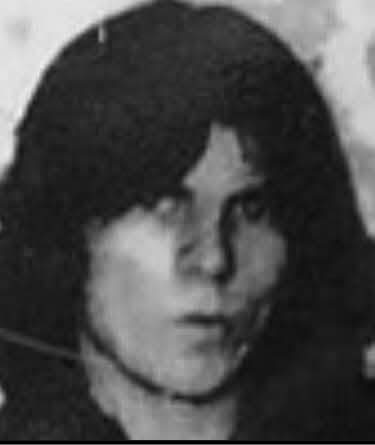
Relatives for Justice (RFJ) statement with the family of Neil McCrory, as they mark the 50th anniversary of his murder in November 1976.
Francis Cornelius McCrory, known affectionately as Neil, was just 17 years old when his life was taken. His family remember him as a cheeky, confident and fun-loving teenager, full of life and mischief, with his whole future still ahead of him.
Neil’s family had already endured unimaginable loss. On 13 March 1972, his older brother Patrick was murdered by loyalists outside the family home in Ravenhill Avenue. Patrick was only 19 years old. Following his murder, the family moved to Beechmount, in West Belfast, hoping to find greater safety. Just four years later, they would lose another son.
The murders of Patrick and Neil devastated their family, robbing them of two young men whose lives had barely begun, and leaving their loved ones to carry the grief of both killings.
On 1 November 1976, Neil left his home and did not return. His family spent the following days desperately searching for him. On 4 November, his body was discovered in the Glencairn area of north Belfast. He had been shot in the back of the head.
Half a century later, his family still do not know precisely what happened to Neil after he disappeared, how long he was held before his murder, or the full circumstances surrounding his death. The family have also long held concerns that Neil may have been subjected to torture before his murder, concerns which have never been satisfactorily resolved for them.
Throughout the past five decades, Neil’s family have remained determined that he should be remembered for the young man he was, and not solely for the circumstances of his murder. Neil’s cousin, Vourneen McCrory, recalls how much it meant to her late mother, who passed away last year, to see Neil’s memory being kept alive. Speaking on behalf of the family, Vourneen said:
“As a family, we don’t want people to forget Neil. We have never forgotten him. He was more than just a victim of the conflict; he was loved and treasured, and he deserved to live a full life. We will always remember him fondly, and we will always remember the beautiful young man that he was. Ar dheis Dé go raibh a anam.”
The murder was attributed to loyalist paramilitaries, with forensic evidence linking the weapon used to subsequent UDA attacks. Despite this, nobody has ever been brought to justice for Neil’s murder.
The weapon used to kill Neil was an RUC pistol, reportedly stolen from a police officer just weeks before his death. RFJ has encountered this familiar explanation of supposedly stolen state weapons in numerous cases involving loyalist killings. Our experience gives us serious reason to question whether such accounts adequately explain how weapons passed from state possession into the hands of loyalist paramilitaries.
The circumstances surrounding the acquisition and use of this weapon, including the possibility of collusion, demand independent and effective scrutiny. Neil’s family are entitled to know how the weapon reached those responsible for his murder and whether any state actors played a role.
Fifty years is an extraordinary length of time for a family to be left without a full account of what happened to their loved one, and without anyone being held accountable for taking his life.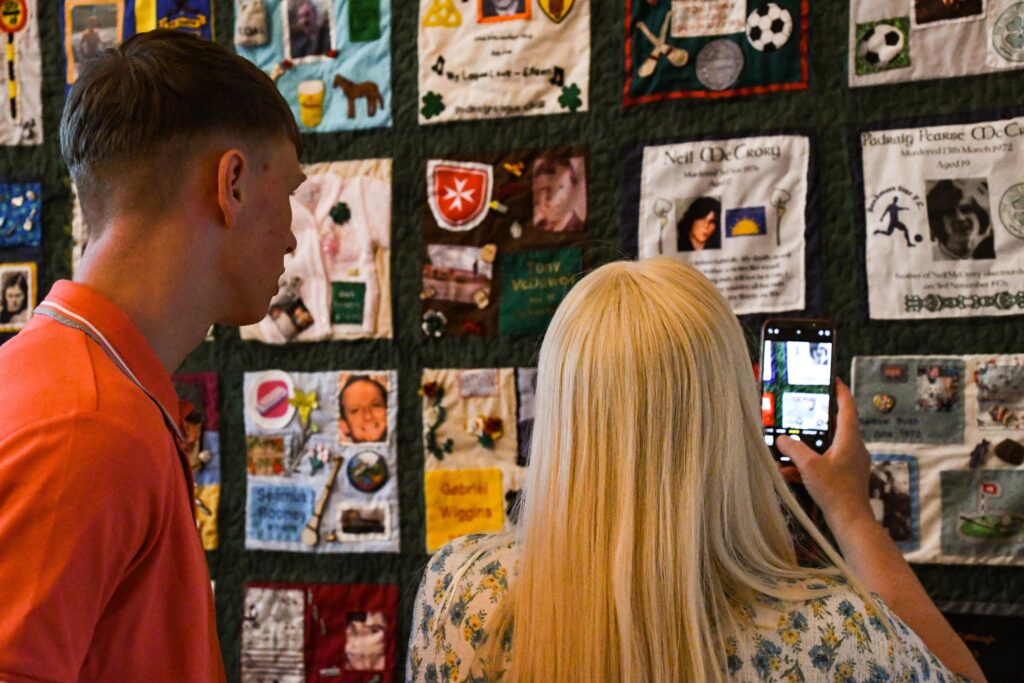
The family’s right to truth and justice does not diminish with the passage of time. The British Government remains bound by its human rights obligations, including the requirement for effective investigation of conflict-related deaths. Yet the legacy mechanisms advanced by successive British Governments have repeatedly failed to secure the trust and confidence of bereaved families.
Vourneen has made clear that she does not wish to engage with the so-called Independent Commission for Reconciliation and Information Recovery (ICRIR). RFJ continues to advocate for genuinely independent, effective and human rights-compliant mechanisms that can command the confidence of victims and survivors and provide meaningful opportunities for truth and accountability.
RFJ pays tribute to Vourneen and the wider McCrory family in remembering Neil and Patrick, honouring their lives and supporting the family’s continuing pursuit of truth and justice.
Fifty years on, Neil has not been forgotten.
His life mattered, and his family deserve answers.


